About Anna Fehr
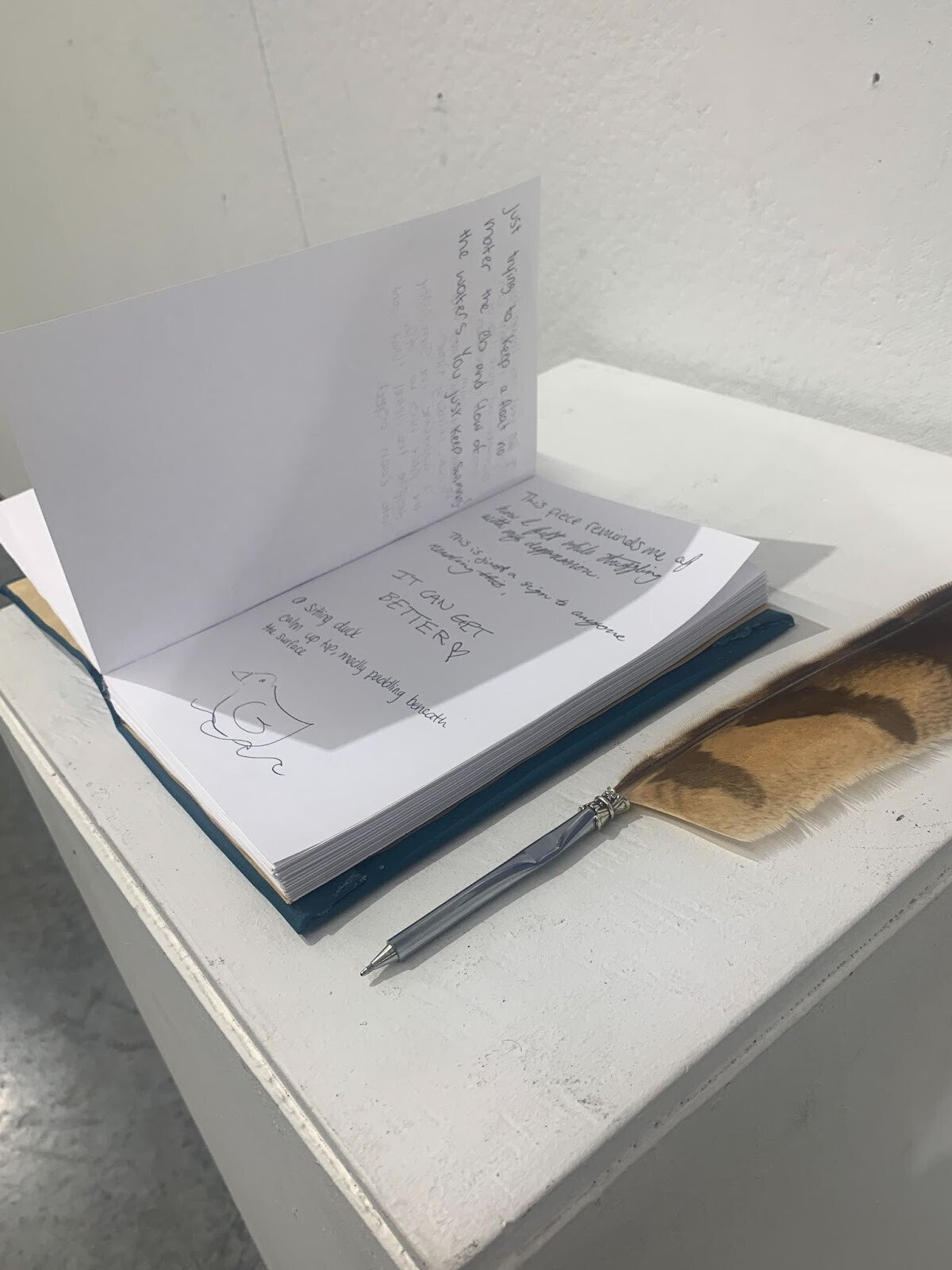
Journey into perception
My work encourages viewers to consider how their lived experiences shape their perceptions of themselves, the people around them, and the world. I invite the audience to interact with my work and stories, building a connection among myself, the viewer, and everyone who has viewed the work before.
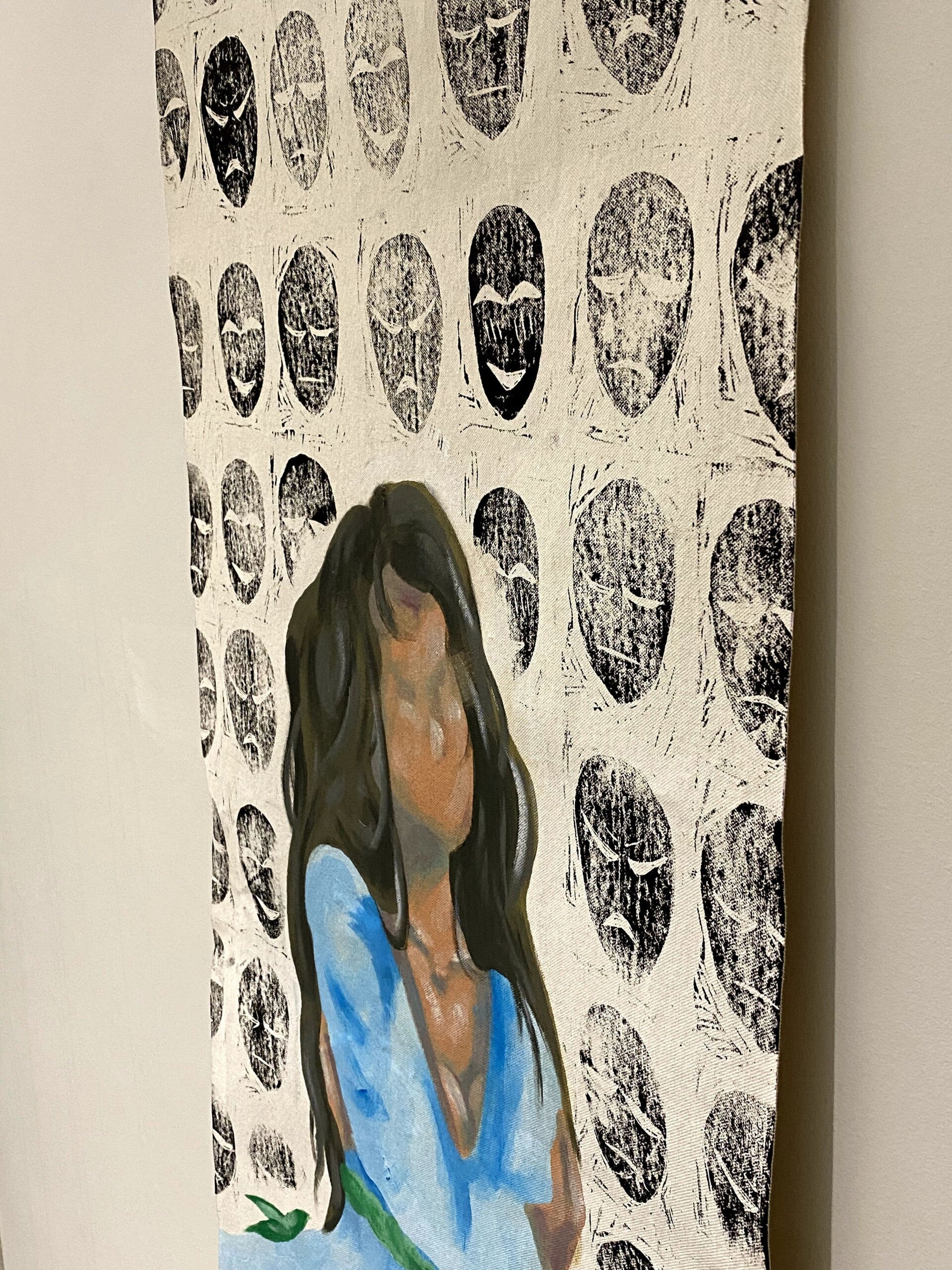
A unique artistic voice
My painting style is more gestural than realistic, intertwining printmaking techniques, such as lino-cutting, creating distinctive textures and layers. The combination pushes her work further and creates a distinctive style.
Artist Statement

Three large tarot cards—The Fool, The Emperor, Wheel Of Fortune—hang suspended from the ceiling with copper wire. A gap in their formation reveals an altar, showcasing a deck of 22 major arcana Tarot Cards and an open book resembling a Tarot Guide. The three banners serve as a shield, protecting the viewer from outward gazes. It beckons the viewer to pull a card and invites them to record their thoughts about it in the guidebook.
My work focuses on the perceptions of not only femme bodies in space but also my body. In my research-creation, I focus on themes of human perception, connection, experience, and emotion. I have a deep desire to understand how positionality affects perspective, how that affects people and how human perspective shifts. Primarily, I use depictions of the human form to provoke thought within acrylic painting, printmaking, and installation. Developing connections among the audience, my work, and my research encourages viewers to consider how their lived experiences shape their perceptions. Through interactive bodies of work, my practice invites the audience to engage with the work and stories, consider how societal standards have impacted our connections with others, and witness perspectives and voices that differ from their own positionality. Drawing on my own experience, and the inclusion of my body in the cards, it was important to understand that ‘The Body Is Not An Apology’. Drawing on Sonya Renee Taylor's book, The Body Is Not an Apology: The Power Of Radical Self-Love, I explore concepts of self-love and unapologetic living — to understand, as Taylor writes, space is something I am allowed to take up.
Using portraiture, it is also important to utilize direct eye contact and narrative, through references to the artist Frida Kahlo and how she challenges the viewer in her portraits, how she represents her body, and how her position, eye contact, and structure affect the viewer's interpretation and understanding. I have also followed this up with Sophie Wohltjen and Thalia Wheatley's article, Eye Contact Marks The Rise And Fall Of Shared Attention In Conversation, which explores how eye contact can provide or deny synchrony. I use this to decide if my work should allow for synchrony and connection with the viewer, or deny them that ability.
Create Your Own Website With Webador